
Editorial Board: Adam Beardsworth, Moses Oluwaroye, Lindsay Bird, Shelly Kawaja
Production and Design Editor: Moses Oluwaroye
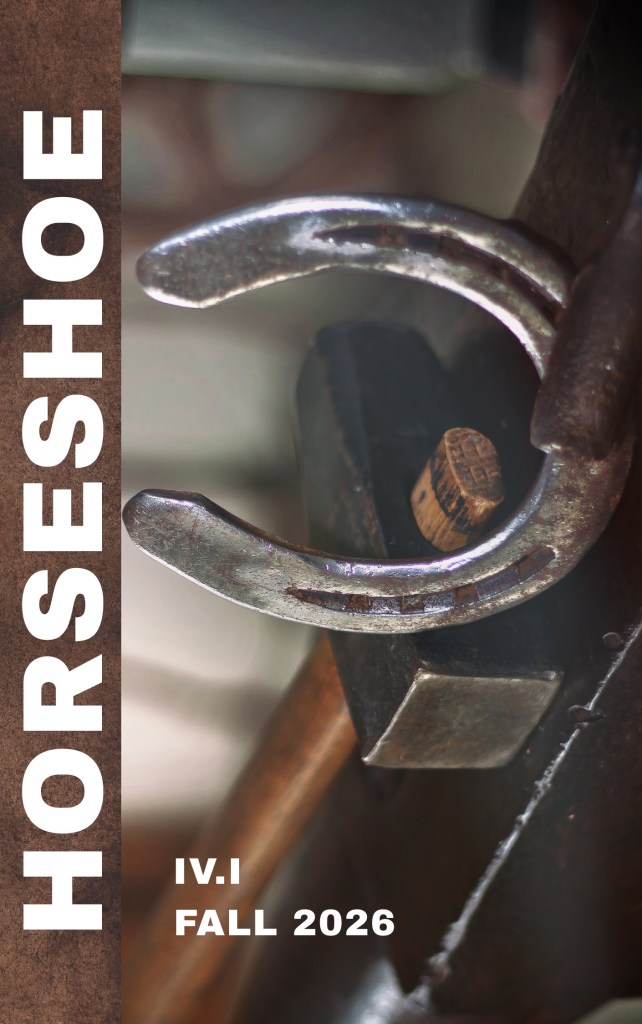
Contents
- Antony Di Nardio
- Antony Di Nardio
- Anna Mark
- Kaela Aryn Tompkins
- Laura Cok
- Christian McPherson
- Haley Montgomery
- Haley Montgomery
- Hannah Barrie
- Louise Carson
- Benjamin Siemon Gorman
- Sean Howard
- Jordan Reeves
- Cory Lavender
- Dan MacIsaac
- Joshua Cockerill
- Simone Garneau
- Madison Farrell
- Renée D. Bondy
- Terry Doyle
- Chris Pickrell
- Catherine Hobbs
Noise Complaints
Antony Di Nardio
The pinks are too loud, the sequins outlandish.
If it weren’t for the range of the sun, the beach
would be all wrong, an off-color joke with a prick
and a little blue pill for a punchline. An ambiguous
cackle lands on the beach wearing a hat and pointing
to a spot in the sky where heaven is kept—
you’d think there’d be happiness in just being alive
without telling the world all about it. I join the leaves,
already red with rage, yelling to get away from
here and find some other place to sit. I hold my breath
and the feeling passes, leaving a scum at the bottom
of my heart that says motorboats and leaf blowers
will inherit the earth. Yet, louder than that and louder
than all is the call of oblivion which boomerangs
into every conversation, worse than any bureaucratic
noise or the lucrative sounds of industrial waste.
I lust after silence but it will have to wait until
my poetry has nothing to say. A helicopter lifts mid-
sentence, rattles the pages of my book, stirs the sands
and leaves the past behind. No bird I know does that.
The coo of the dove and the caw of the crow cling
to a happiness that begins at home. Oh, how I envy
their songs! The world might go to war today. There is
so much to be heard in a single syllable word.
Last Resort
Antony Di Nardo
I opened a resort, a last resort …
James Tate
Appetites and Birkenstocks.
Panamas and fishing lines.
I love the look of tattoos I can’t see.
Iambics and pentameters.
Couplets and conclusions.
I love how things begin.
And there, across the sea,
A million miles of oceanfront.
And there, above the trees,
Birds I carry with me
In the penthouse of my head.
And should I need a beach,
There’s a teaspoon full of sand
That’s deep inside my pocket.
I’m talking to the waves,
The waves talk back in rhyme.
Every word’s illuminated.
Every word that comes to mind.
Appetites and Birkenstocks.
Panamas and fishing lines.
The Snake, the Frog and the Rose
Anna Mark
We swerve as one creature to avoid loose gravel, riding in tandem
for a profile of the bay we don’t usually see. We struggle
with kickstands, stumble on stones, but despite us—a snake remains poised—to eat a leopard frog. We join
predator & prey, conjoined in trance, a diorama of expectation: the sly one in me slithers out of me, yellow-bellied & slick
to intervene. A scaled length of arm-hand-stick sets a trap, slides deeper into the glade to poke the frog—into the serpent’s mouth.
The me who wants punishment slips out of me, iridescent, caught in my own snake-pain, grasping at air,
crippled in the snake’s jaws. Now—a rose—the me above, rouses me to reign: human & inhuman, humane & inhumane
over the screeching pain. Fingers pull the frog, pull the snake, pull them apart—sorry, sorry, sorry, sorry, sorry!
The diorama is vacant, the desecration behind us lost on blind stones, and the profile of the bay we didn’t get to see.
Shifting Baseline Syndrome
Ecosystems Decline and We Measure the Losses Against What We Remember Rather Than Where They Began or The Hypocrisy in Combatting Climate-Change
Kaela Aryn Tompkins
My sons are in a tide pool.
They skitter like crabs,
squeal over sculpins.
This moment significant:
little fingers lingering on limpets,
curious tentacles capture and kiss.
{what a gift}
– This – a lesson in loving gently.
I want to embrace gratitude. I do.
But what are we living through?
I can’t forget that heat dome smell of mollusks,
the decay.
Billions of intertidal invertebrates –
desiccated ecosystem on full display.
I am a common mother
doing common mother things;
how do I explain this strange
reality of catastrophe
without change?
It’s going to be a scorcher, a record breaker.
News relayed without fear.
Vacationers appear on beaches –
the yearly arrival of bikinis and beer.
There is a disconnect / here.
Children wave as private jets careen overhead
on an average of 10,000 flights a day.
Tofino bans single-use plastic as a counterbalance.
I collect rainwater to grow my own food.
A single data centre churns through
millions | of litres | of water | per day.
I buy compostable trash bags.
Billionaires blow-up experimental rocket ships.
What is this?
I don’t diminish our washing of ziplock bags;
our effort is mighty.
But my babies are the tide pool,
and this infinite extravagance is the sun.
We are the filter feeders of their waste.
I plan to withstand El Niño,
carry rage in my hand.
“Dragon claws!” my son whispers,
snapping me into the wizardry
of gooseneck barnacles.
I revel in any distraction –
these claws, these kids.
Mussels and mouths
open as we submerge.
I don’t notice the temperature rise
as I swim in the pot.
I teach my sons not to be wasteful.
The mollusks rot.
Midwest Elegy
Laura Cok
A lake so broad it apes the sea
But softer, sweeter, stranger tides
In God’s own country. God and me
Aren’t speaking. If possible to say
That I don’t speak to someone
Always/never gone away
The people tall. The girls were blonde and mean.
It’s hollowed out. The beauty still remains.
The land is not what died but me.
Give out/give up. I barely tried.
Resentful of a lake that wasn’t sea
I made my choice. My mother cried
High summer. It could almost be
A miracle, if those came to me.
Not true. I tried for seven years.
Times seventy, then I’ll forgive.
Could talk of factories and rust
But that’s not what I know. A polished
Concrete floor, my head thrown back
Above, revolving, I looked down
I knew it’d hurt when I returned
But had to. To my body on the floor.
I sanctified it with my skin.
Squishing Myself
Christian McPherson
With bright orange shoes
Cheeto shoes
I’m walking
getting steps
and my neighbourhood
has been injected with summer
the trees have Botox flowery lips
and the grass is as green
as Popeye’s spinach
I see an ant
big one
like his body is composed of black pin heads
and he is like a black cat crossing in front of me
and I don’t squish him,
I make sure to go over him
but then I imagine
the sky turning black
as if a thunderstorm were to suddenly roll in
or smoke from a burning building
turning day to night
but it’s not a storm or smoke
but the shadow from a giant shoe
worn by a giant
and that giant is me
squishing myself
with orange Cheetos shoes
don’t worry
this isn’t a suicide thing
this is just giant me
squishing little me
like an ant
it would be quick
and I wouldn’t even know I was dead
and what would my life have meant?
and how would I explain myself
to my family?
these are things I think about
when I get steps
.
Biohacking Gorgeous Girls
Haley Montgomery
The secret to staying young
is to never express an emotion
that’s unbecoming.
All doctors agree sniffishness
is the perfect forever face.
Routine lathering of polynucleotide funk
in exchange for the complexion
of a clam in five days or less.
It’s time to biohack tomorrow’s girl.
Answer the constant ululation
coaxing us to find the fountain of youth.
Beneath the watery abyss
bones sink like solivagant soldiers
A tibia who was once the deipnosophist
of your dinner party.
The fountain of youth lies
to the offspring. Selling ziplocked
uniformity to seize wrinkled stars.
Holding us hostage
in a zugzwang of beauty
exhortations attempting to cure age
before death.
The beautesque cycle for our
next generation.
Table of Abundance
Hailey Montgomery
Infinite meats and cheeses, dead presidents,
sturgeon flown in from the Caspian Sea,
sister’s laughter, French idioms, 150 moons
for dessert. My eyes are glossy gazing at cookbooks.
The Metropolitan Cooking for Modern Women
has a fabulous cornflake chicken casserole.
Setting the table increases my bewilderment.
I can’t possibly put the fork before the knife.
Who will I choose to be tonight’s godhead?
Chit chatting between so and so about such and such.
Before the amuse-bouche, I’ll beg the captain’s wife
to ignite the kettle of inspiration until scarlet cheeks
and scrapping plates interrupt the ease I was expecting.
Tonight, the Junipers command my presence.
There is never enough.
I call myself an idle spring.
Reflections II
Hannah Barrie
Maple key look-alikes litter the lawn.
She takes me to the cafe and tells me the way
people turn dark around the edges,
but the sun is out and things are
looking up, anyway, even when the winter
turned us belly-side up and it wasn’t cute,
vulnerabilities exposed to the whole
downtown. I am scratching at my flaws
trying not to bleed too publicly,
because people talk, you know the way
it is. There’s a three-pronged tulip
in the ivy banking my house like
I’ve never seen. The first time
I mow the lawn all the tiny new trees
will get beheaded. No point in pulling them
up by hand. I flag the emails for later.
The sun is out and things are looking up, anyway.
I’m a heart poet
Louise Carson
and I go
along, feeling
my way, afraid much
of the time
hoping to wake
from the bad dream
in the warm
when I could have been
that chirp
coming
from the night-hedge
Ocean
Benjamin Siemon Gorman
I miss being around the ocean
Watching it crawl to my feet
And the breeze hugging my soul
I have lived almost 52 fortnights away from my favourite ocean
And my heart has grown colder as each night passes
I miss being around my family,
sitting around the dining table,
and laughing about the food my little sister cooks.
I always joked that salt and water were her favourite ingredients
because they somehow found a way to outshine everything.
I miss being around these words
They helped calm my nerves
but lately
I have become unresponsive to the way they beat
I have been staring at a blank screen
Hoping somehow the words find their way
Hoping they remember me
The way I have always remembered them
But the silence crawls around the page like how the ocean crawled to my feet.
Trick Triptych (climate change postcards, cape breton)
Sean Howard
halloween lady-
bug, fly away
…
*
flowers, fall o-
pen – seaside
buttercups,
offered
up
*
…home? our
house is on
fire…
The Receeding Shore
Jordan Reeves
I reached out to touch my brother’s arm, but something held me back. We were standing outside one of the oldest funeral homes in the city. We were looking at my mother’s death certificate.
“Do you think we’ll need more copies?” I asked.
“I don’t think so,” my brother said. He was peering at me cautiously. “It’s good to see you again, Daniel.”
I couldn’t help but notice his eyes. They were paler. We had not seen each other for some time.
I glanced around at the traffic, feeling conspicuous in my tailored suit.
“Meet you at the celebration of life in two days,” I said.
Encouraged that I would be too busy taking care of things to feel despondent, I set off to clean out my mother’s apartment on the other side of the city.
On the drive over, I was thinking about the eulogy, wondering what people expected of me.
I was mulling this over when the Abbotts appeared out of nowhere.
“Daniel? Daniel Kane? Is that you? So good to see you after all these years. But what a shock about your mother. We are so very sorry.”
It took me a second or two to recognize them.
“Just the people I wanted to see,” I enthused. “Do you live in the building? Would you be able to let me in?”
“But of course. Your mom was such a dear friend. You simply must come up for a drink.”
I had been travelling for many hours and thought a drink would do me good. Moments later, powerful gin and tonic in hand, I found myself agreeing to everything the Abbotts proposed.
“You must publish an obituary,” they said. “All us old folk read them. It’s how we keep track. And your mom, she’d have wanted you to talk about her many accomplishments. You will have to invite everyone to the celebration of life. We’ll send your brother a list.”
When I told them I was going to find the superintendent and start cleaning out my mother’s apartment straight away, the Abbott’s exchanged looks.
“Oh, no, dear. Your mom moved back to the island, back into the house your dad built.”
“Yes,” said Mr. Abbott. I thought I saw a shadow pass across the old magistrate’s face. “If you hurry now, you can make the last car ferry.”
I found myself wending through old neighborhoods, remembering things I had not thought about for a long time.
The old legion hall where I had gone for cub scouts appeared in the headlights. One evening, driving back with my mother, a senior from the high school had exposed himself at a stop sign, and my mother had joked, to my prepubescent embarrassment, “He was certainly proud of himself, don’t you think? Myself, I didn’t see it.”
At that hour, the ferry terminal was a graveyard. I eventually found a dock worker.
“The last sailing was some time ago,” he said glancing at his watch, “but you might be able to make the water taxi.”
Sure enough, there was a power launch shedding yellow light at the end of the wharf. When I reached it, the captain motioned for me to step across the abyss.
We motored out in inky darkness, the boat laboring against unseen waves. By the time we docked, I realized I was on the wrong island. My voice must have carried because one of the disembarking passengers addressed me.
“Are you Mary’s son?”
I was blinded by a phone light. An elderly woman grabbed my arm with surprising strength and led me up a gravel lane to a shadowy house.
Inside, I was greeted by a second old woman wearing a voluminous flannel nightie and carrying a candle.
“Our condolences. Terrible, just terrible what happened to your mother. But she did get a good fifteen years out of that heart.”
Not wishing to betray my ignorance, I nodded solemnly.
“Your mom was very proud of you. She often hoped you would visit, but she understood your responsibilities. Just our luck we found you.”
“Yes,” agreed the woman in the nightie, raising her wrinkly arms. “We had a little bet between the three of us, you see. We each put down a hundred dollars. The one who lived the longest would get to keep the whole lot.”
“We were so sure your mother would win. So, we gave her our share for safe keeping.”
They made me promise not to let my mother go to her maker without settling her debts. Then they made up a bed for me, and my thoughts turned to the eulogy. I told myself that I had better get started on it. No doubt, there would be many friends and family in attendance and expectations would be high.
When the candle went out, it was pitch black in the house. My phone battery was low. After a few minutes, I nodded off, still feeling the rise and fall of the phantom water taxi beneath me.
The next morning, by chance, I caught a lift to my mother’s island on a gravel barge. The captain was a man of few words.
We stood side-by-side in the wheelhouse watching my mother’s island stay the same size for much of the morning.
When we finally arrived, I was surprised to see a police constable on the dock waving at me.
“Daniel Kane? Just the man I was looking for.”
My hair was windblown, my shirt untucked, I had not washed since leaving to catch my flight two days before. Still, the constable appeared delighted. He insisted on driving me up the hill, and I was surprised when the barge captain climbed into the car as well.
I was further surprised to see more folks waiting inside the small one room police station where I was introduced to my mother’s cleaner, handyman and gardener.
“Our condolences, Daniel. May I call you Daniel?” The constable opened a folder. “We all understand this is a difficult time.”
“The thing is,” I said, “my mother’s celebration of life is tomorrow, and I’m really quite busy.”
“Certainly. You will have to excuse us. You see, Daniel, your mother owes quite a lot of money. What with the renovations, the new retaining wall and everything.” The constable waved his hand vaguely.
“Well, I can assure you,” I blurted, “my mother’s debts, whatever they are, will be paid in full.”
“Ha, well that’s a relief.” He smiled. “A relief indeed.”
I repeated my assurances, mostly because I was aware that it was already midday, and I wanted to visit the old house without delay.
As I started up the road, however, it occurred to me that these local charlatans had likely been taking advantage of my ninety-year-old mother.
It was a pleasant walk to the house and brought back childhood memories of summers on the island.
There was a long steep driveway, but I chose to follow the old trail which we had used back when the house had been just a cabin.
Momentarily, I thought I heard a child’s voice and recognized my old tree fort. Upon getting closer, I saw that it had been expanded considerably. Curious, I climbed up and discovered an old vagrant sleeping there.
I recognized him as the island hermit, much older now. As children, we used to find him sleeping in our boathouse.
To be clear, it was a long time ago, and I have no idea whether there was any truth to my mother’s assertion that he was always cutting across our yard to spend the night with the spinster next door. Regardless, my mother’s accusation became a source of animus on the island, and now, with this memory fresh, I demanded that he get off our property.
I was still discomfited when I reached the house. The landscaping was all new, and the location of the gate had changed. I could not find the extra key.
At that moment, I heard movement from inside the house. Two well dressed women were standing, talking to one another in our living room.
Unable to attract their attention through the glass, I scraped through blackberry bushes above the front walk, jumped down over a low stone wall and rang the front bell. After a time, one of the women opened the door a crack.
“If you want to see the house, you must make an appointment.”
I couldn’t suppress my laugh. I must have seemed a bit wild.
“There will be an open house tomorrow,” she said rather coldly and shut the door.
Somewhat disbelieving, I waited for them to re-emerge. When they finally did, the same woman hurriedly locked the door behind her while the other looked skeptically in my direction.
I had meant to explain myself then but was distracted by a text from the local island paper about the obituary:
We prefer to use the attached color photo of Mrs. Kane taken at the board of island trustees. The one you sent did not look like her at all! Pls review. At deadline. Cost will be double.
I was taken aback. Still, I had no reason to believe that the paper’s intentions were untoward, and I wanted to use what little time was left that day to find a lawyer.
The only lawyer on the island had closed her office early for something called “Island Days.” I asked at the local pub, but no one knew where she was.
Thinking I needed to find a quiet place to make a few phone calls and get started on the eulogy, I asked the busy bartender where I could find a room for the night.
He laughed, then reconsidered upon seeing my face. “I suppose we might have space upstairs. I’ll see what we can do.”
I thanked him profusely. I sat there as a band took the stage for Island Days. A pall of smoke hung over the stage.
Naturally, quite a number of islanders had known my mother and they offered their condolences. More than a few put a drink in my hand.
One hour became two, two became three. Each time I managed to catch the bartender, he said, “Just a minute, I will check.”
Eventually, he showed me up to a room which was more of a closet situated directly over the stage.
I did not see how I could get any work done there. Yet, there was another reason for my unease. While I had been waiting, a woman about my age had insisted that we knew one another. I told her she was mistaken. Claudia was her name.
She was wearing a black off-the-shoulder dress and was quite shapely. She had a habit of leaning close to me with increasing familiarity.
I told her she had confused me with someone else. But then I did begin to remember, and I was immediately ashamed of my insensibility. I thought there must be something wrong with me.
It felt like hauling a heavy object up from the murky depths of the sound, one arm’s length at a time, until everything suddenly surfaced.
Claudia had been my first teenage romance. We had met one summer, and, as it came back to me, I recalled that my mother had found us under an overturned canoe and vociferously overreacted.
I do not recall with certainty whether I returned downstairs to continue my conversation with Claudia. All I know is that, at some point, grey light was seeping in through a book-sized window above me. My ears were ringing, my phone was dead, and I realized that the celebration of life had started without me.
I stumbled outside in a light rain, combing my hair with my hands.
I managed to flag down the local island bus, only to have it come to a shuddering halt minutes later and the driver step out for a smoke.
I found myself hiking along the same road to the house, this time in a cold sweat.
I visualized the Abbotts, looking on somewhat doubtfully as I prepared to speak. I pictured my grieving brother, Mom’s old betting friends, the constable, the handyman, the cleaning woman, the gardener and even the barge captain, all wearing their best clothes. I told myself to prepare for knowing looks from Claudia.
No doubt there would be many others, too, a few of whom might be interested in buying the house.
I huffed down the driveway and, once again, lost my way because of the new landscaping.
The front door was propped open.
On a small table was a photograph of my mother, some wildflowers in mason jars, an open memorial book and a few copies of the island paper.
The wide central staircase was less grandiose than I remembered. It led down into an expansive space fronted by floor-to-ceiling windows and skylights now pattering with rain.
At the sound of my feet on the steps, the crowd quieted. Faces turned toward me. What they must have been thinking, I do not know.
I saw my brother gazing out the window.
I knew enough not to panic, but the words I was looking for remained strangely distant as though they were hovering out over the bay.
I am not certain what happened next. Maybe it was all the hours spent travelling. I could have sworn I heard a voice spindle up over the assembled crowd. For a second, I even thought it was my own voice until I saw the old magistrate Mr. Abbott in front of me. It took all my effort to bring him into focus.
“Son, we have been more than patient.” His cloudy eyes jabbed at me like the darting minnows under the dock. “You have kept us waiting. You have kept us waiting for a long time. So long, in fact, that many of us no longer know who you are. Moreover, it’s apparent you no longer know yourself. Yet here you stand full of pretension, as if your poor dead mother would be proud. There can be no worse crime!”
All I remember then was the sound of waves crashing on shore.
Once the celebration of life was over, my brother dropped me at the ferry. He wore a pained expression. “Are you sure you can’t stay any longer?”
I shook my head. I was in a hurry to make my flight. I told him I wished it could have been different.
At the last second, curiosity made me turn, and I watched him go up the hill and finally disappear.
Memento of Pangong-Tso
Cory Lavender
Found this horseshoe on the lakeshore: agèd steel tooth of the Himalayas. Sand and stone: plaque caked in grooves, holes for hammering nails into hooves. Flattened rebar flipped from hand to hand, eyeing it, I pass through its oxidized arch. Pronged, brawny claw, this memory magnet domed like Buddhist stupas shelter relics, artifact bridges the interval between Halifax and Ladakh, where Kunchok and I toast our meeting with tumblers of Old Monk. Above Merak, inside a hilltop lhato, shrine to the local deity, horseshoe becomes a pumpa, pot of auspicious seeds amid the ash of incense, burnt-out copper prayer lamps. Light an oily wick, pull up a tattered cushion, observe rifts, a shattering dissonance beneath life’s smoothed-over surface. My own scapegoat, I step out, watch a hawk lasso the hilltop scanning for prey. Pick up a freeze-dried scrap of furry cowhide still smells too deathly to pocket. Quick as a rainbow appears in this ore, the horseshoe conjures a headstone for a calf’s glinting ribs and jawbone, for the poor animal lost its shoe. Shortcut to Hemis Gompa: shoe outlines the breast a little one’s mother offers from her robes among hundreds-of-years-old wall paintings show the Wheel of Life, hundreds of Buddhas. Lucky for us, today’s the head lama’s visit. Young monks give low-key high-fives, hushed but abuzz. The dungchen set thin air to trembling. The child’s handed a lollipop. Brass bells toll. Cymbals clash. Cameras flash. His Holiness the Twelfth Gyalwang Drukpa enters the courtyard. My souvenir sticks out its rusty tongue.
Snag
Dan MacIsaac
Marty was no fool. He’d always known that his stepfather Wyatt Stokes wasn’t his real dad. Sure, he went by his stepdad’s last name, ever since Wyatt scrawled that down on a freebie library card for Marty at the Valley branch. Anyway, a last name on a loaner card was the only thing the logger had ever given Marty, other than a good wallop. Marty could take a lot. He was no whiner. During the winter and spring of the grade five school year, Marty got pink eye, mumps, chicken pox, and pinworms—all in an ugly row. Those infections slowed the schoolboy down enough that Wyatt, totally plastered, could lurch past Marty’s stuttering mother and get a good crack at him. Wyatt’s knuckles bulged like lug nuts and even the side of his hand was hard-edged as sheet metal. Sharing a surname didn’t mean that the logger and the lad were real family. Marty was just bumming a name.
Marty never talked about his stepdad. Not about getting bashed. Nor about Wyatt being an imposter father. Nothing about the man squatting in their tornado-bait trailer guzzling booze like he was sucking on a firehose.
A lot of the time, Wyatt was off in a camp like any run-of-the-mill dad from the Valley. Marty would hope the bush ape was gone for good, smacked down by a huge dead branch, brained by that rotted widow-maker dropping heavy as a diesel winch from the jagged heights. Not that Marty’s mom could really be a widow. She and Wyatt never had tied the old love knot, just looped a half-hearted hitch. But most likely she’d miss the whiskery logger some if he got offed. Though Marty’s mother would twist the phone cord around her arm like a blood pressure cuff and yammer into the clunky receiver that Wyatt was as dim and bald as a busted light bulb. And she’d lean out the door to harrumph at frumpy Betsy sitting outside the rickety RV that Wyatt, back in town, was a guy you could count on—to let you buy the next round then the next and the next. Sure, she made a joke of it all. But Wyatt, right out of camp, was stinking bushed. Clenched tighter than a rusted nut. Ready to take a swing at anyone—anybody half his size. Marty had to shuddup dammit, fuckin’ lissen up.
Marty took in more than Wyatt’s cussing. He’d learned his own sad history, overheard the hissing through the trailer park about him and his slipshod mother. How, just before Marty popped out, Cassie waddled around the cracked macadam of Cloud 9 Way, bleary-eyed, her gut bloated like an off-roader tire tube, patched and pumped tight. And how Marty had come roaring out like a five-alarm fire in that old fossil of a trailer with no baby doc or proud papa in sight. Of course, Marty wouldn’t want the faller for a real father. Wyatt out of camp meant the boy was tripping over a tipped case of empties when heading to the loo. Reeking like a beehive burner stuffed with slash, the logger roved around the trailer, dropping cinders from his roll-yer-owns. Marty even had to sluice ash out of his cereal bowl. But with Father’s Day coming up fast at the tail end of the school year, Wyatt was all the boy had. A kinda sorta dad.
The grade five class was making cards about what dads do. Men in the woods, in the fields, or in the channel. Men bucking up timber and lashing wire to windfall. Men mucking out ditches and stump-busting. Men baiting hooks and hauling in gillnets glinting with spring salmon. The teacher made them stick to fathers-at-work. Because last year, one smart aleck doodled a greeting card of his old man lying dead drunk under the barbecue, and another scamp squiggled his duck-hunting “uncle” sticking his shotgun out of a blind to blast a sea lion off a log boom.
None of the kids had dads who were firefighters or cops. For kids, those uniformed guys were brawny heroes ready to take on pyros or mobsters. The funnies and TV shows had hoodwinked the youngsters. Their Valley was policed by a four-man detachment of bachelor Mounties who investigated crimes like pig snatching and diesel siphoning. Whenever a fire flared up, the Valley fire brigade fumbled with ax and hose. Most of the volunteers were boozehounds. Too wasted to hightail it out the back door of the bar, the winos got pressed into facing the blaze. For Marty and the rest of the grade fivers, a family man was a farmer, logger or trawler—a regular working stiff just breaking ground, wood or wave. Marty sharpened his pencil crayons and drew Wyatt bent over in grey longjohns, impaled through the ass by a black snag.
Skewering Wyatt on paper didn’t go easy. The next morning, Martin, his mother and Wyatt hunched around the wobbly kitchen table. His mother tattled to Wyatt about the principal calling. About the Father’s Day card gone all wrong and a long lunch hour detention. The school was worried, his mother had reported, about Marty having a bad attitude. She wanted to know what her boy had to say for himself.
Just a joke, said Marty, and that card wasn’t theirs to take.
Wyatt’s face flushed. Bloodier than chainsaw oil. He slammed a mallet fist on the table. The coffee pot jumped, slopped. Wyatt rushed outside to his bashed-up Chevy. Goodyears shotgunned gravel against the trailer’s siding. Half hour later, he was back at the RV park, foolscap gripped in his fist.
Wyatt took a chair and said, Showed ‘im. Showed that cocksucker principal the diff’rence between bad attitude and badass. That gutless shithead wouldn’t give up the card till I threatened to ram my pickup right through the fuckin’ office. And after I had started off super polite, lettin’ the guy know that the picture was Stokes property. Cause it was all about me and made by my kid. Didn’t matter the art was done on school time. Give any kid with spunk a fist full a crayons and some shit is gonna fly.
Wyatt leaned in, Lissen up, Marty. Stokes gotta stick together—and stick to the same story. Yer back there tomorrow. Anybody asks, just say that the picture only shows logger sport. A tumble from a speed climb. Just a spill off the old spar pole. Say nobody is gettin’ the shaft. Not your old man. No splinter of dead wood hangin’ out of his butt end. And, lissen up, I kinda liked the doodle. I can take a joke. And sooner get a stick in the ass than in the head. A snag to the skull means lights out. For good.
The logger teetered back and used a realtor’s giveaway magnet to slap the foolscap on the fridge door. As if Marty had won first prize, sponsored by some snickering salesman. Some fake-faced, smirking dirt flogger.
Turned out, Wyatt stuck around—longer than that toothy fridge magnet—till he got liquored up one last time and drove hard down the blacktop to Hell.
An Appointment
Joshua Cockerill
Wrenfrew: The worst thing that can happen is the baby dies.
Praeter: Wrenfrew storms off. Is it something I said? Wren…
W: I snap my purse off the counter and push past him. “I’ll be in the car.”
P: “I’ll be in the car,” she says. The cat mews, follows imploringly.
I only asked about the traffic – what’s the worst that can happen…
What’d I say?
W: “Don’t let the cat out,” I say and let the door slam behind me. By force the windows shake. A bit much maybe, but once I get in the car I slam that door too, why not. Sirens out of somewhere, the East, from the direction of Kensington Market. Honking. Always honking. Cacophonic symphonic. Not very productive, a honk. And yet, listen … driving in this city is like living in a failed experiment.
8.32 am by the dashboard. The Doctor’s appointment is at 9 am. And you don’t keep a specialist waiting. Impatient, self-serious crowd.
Get real – it’s a woman pregnant nine weeks you don’t keep waiting. Is P in there dragging his feet?
I swipe at ladybugs on the dash. Four, six of them. The dashboard’s hot to the touch. Ladybugs get in everywhere these days. But how did they get in here? How does anyone get anywhere?
I reach over and lay on the horn.
P: Is that our car horn sounding? Seriously! Feeling pockets for car keys. Nowhere. Where the fuck are the car keys? Can’t find the keys. 8.34am. 26 minutes until the appointment and only twenty blocks, but…depending on traffic.
No way of knowing she’d react this way. I’d only meant what’s the worst that can happen if we’re made a few minutes late by taking transit. The train’s more reliable anyways, leaves a better chance of being on time. I could have shown more tact, I suppose, Wren’s reaction giving me hindsight. “But we’ve left it too late,” she said. So be it. Now we have no choice but to take the car.
Searching for the car keys. Checked each pocket twice. I’ve gathered everything else – the medical file, her precious journal, the house keys – just in need of the car keys. It’s always the pesky car keys. I’ve checked the hook, the drawer, the table, yesterday’s pants… my desk? To the office. And yes the keys are right there, there next to the newest pages of my novel. Has the cat rustled the papers? My productivity in marriage has… flagged, would be the polite word. Three years now like this. Well well, have yourself another bottle or two tonight and dwell on it some more. Working miracles for you of late.
Car keys in hand, I’m ready. Don’t let out the cat. Gonzo’s sniffing at the door so with my foot I lift him out of the way. He mews, jumps onto the window sill and stilts across the ledge.
I approach the car ignoring that Wrenfrew’s been honking the horn. I get in and… damn it’s hot inside. Trapped herself in here with the windows up. She stares straight ahead, sucking her teeth, seatbelt on, purse in lap. I’d only meant…
In her lap I place her file and the journal. “Thank you,” she says after a begrudged delay. Patience will out.
I start the engine and a ladybug flies out from under the steering column.
Wren’s hand is laid delicate across her belly.
W: Praeter puts the air on full and we pull sharply into traffic. I’ll close my eyes for a spell. The nausea’s been gone now three days and that’s what worries. Nausea come back. You don’t want to live with it but you don’t want to live without it either. P knows. We’re driving in silence ‘cos he knows.
P: To my count it’s been nine weeks. The same exact amount as last time.
Time measured in empty cups.
The last time. Late spring. Memory haunts me still. But if I’m nothing but a passive observer to my mind. Memories flash. The fainting. The blood.
Look at that, a broken hydrant pissing into the street.
W: Hydrant springs a male jet.
I have to resist the temptation to think I’m the first woman in the history of the world. I’m not the first to experience the facts of miscarriages, insecurity, inadequacy, panic. Though sometimes it can feel like it: the first ever: origin of everything. Who else could have survived such things. Indignities.
What do people mean by despair? How much did P follow me down? I wonder. Follow me down. Follow my eyes. We’re married after all – took the Oath crossing all of our fingers and toes. Till death and all that. Saccharin talk. Life is not a possession, a commodity. Life is not a unit of time. Is not a distance. Is immeasurable, unlike profit. Is immutable, unlike joy. Is profit not the opposite of joy? Time? In the rock paper scissors game of life, where profit eats time and time eats joy and joy eats profit, what’s the difference between any of these things? Their accountability I guess. Their staying power.
Is it me who’s preventing P from writing somehow? No no, it’s not me. Couldn’t be me. But could it be us?
P: She’s wearing her saucer-chip necklace. Buttons on blouses arranged to see in. Necklace peaks. Replacement I gave her for l’Œil de Julie she broke. Shame. Two years ago. No three. Curious choice to wear it. Loves me loves me not. Loves me. Dumdadum,
The trees for you incline this way / For you reflect in the ocean’s sway / For you the bird forfends our day / I’m still learning to love you in my way / Many ways to love
W: Car slows to a stop at the intersection of Bathurst & Bloor. Red light. Cyclists. Two drunks hold each other up, arms linked. Pedestrians part for them. A streetcar and a dumptruck rattle by in opposing directions. A motorized chair blasts calypso music, passes. Beep beep. People with dogs.
“See how she carries that dog?” Praeter says.
The dog. Panting. Too hot to be walked. Draped over the shoulder of a young woman. Hair on the wind.
Not yet 9am and with all this heat trapped in the pavement, concrete, steel and glass like magnifiers. Buildings, glass faces with the world in it, swirls, clouds twisted grotesquely. What have we done to this world? Is this nausea I feel returning?
Praeter’s eyes have lingered long enough on the girl with the dog. Can he see from his angle that she’s pregnant? Parallax. I know what P’s thinking. Richly curved, shape of nipples visible through shirt, denim short shorts, round cheeks poking out the bottom as she shifts her weight, tattoos up the legs. Such a predictable pervert my husband.
P: Crossing, the woman with dog, tattoos all the way up into her shortline. Ugh I want to call to her: Girl – you’re killing me with that ass!
W: I bet he’s thinking of squeezing her cheeks together and taking a bite, like he’s always doing to me. Love bites.
P: Third wave feminism – if you got it, flaunt it.
W: Always horny when he’s hung over. And when’s he not hung over?
A first generation feminist, my husband. I could laugh I can so read his mind. Speaks such inanities as “a pretty mouth is one that forms pretty locutions.” Will only someday realise it’s not exactly feminist to sexualise a woman through her clothes. Never sees himself, I bet, through other people’s eyes.
Honest, I’ve never understood the ass thing, the fascination. We’ve all heard of oral fixation but what we have here, in P’s case, is anal fixation. Retro I suppose to be a tit man. Notions of sex for him, raised catholic, are inherited. The entire premise to covet what you can’t have. In his mind it’s only natural to wonder what she’s hiding within those shorts. Wants to unwrap her like a bonbon. Plagues of ideas. Share in the blood. In the hot breath of the virgin. Wants the orifices of saints, reborn, ageless, hairless, every hole a wound. Wants to take her up the ass with the pope’s dick. Sick shit.
Sex, when you think of it, really think of it, is absolutely disgusting.
I rest my forehead against the glass. It burns hot. I look up at Honest Ed’s with its face of light – it’s strange beauty. Billboard as lipstick. Electric light as memory. Flashes.
P: Finally the light turns. Green. Some small talk would be nice.
W: Honest Ed’s pulls away. The girl with the dog passes, has passed, is gone. P steps on the gas a little rough, like he has something to dispel. “In a hurry, dear?”
P: She pulls her notebook from her bag. “Now, darling?” I say, “We’re nearly there.” “Doctor says it’s important to keep a record,” she says, “to track my body’s changes, how I’m feeling.”
She opens her notebook and, looking for a pen, fiddles noisily in the glove compartment. Is that necessary? She looks to me deliberately then writes in her tidy hand.
W: Saturday, 31 August 2013 / Ultrasound appointment / Women’s College Hospital / Hospitals make me think of mother / P asks me this morning what’s the worst that can happen / Just before we leave the house he asks me this / He meant no harm of course / He meant what with the traffic what’s the worse that can happen, getting there on time, transit or not / But my mind goes to the worst / No heartbeat / Visions of miscarrying again /
How I wish to write something positive: still pregnant. How I wish to write that. I wish I wish.
P: She sighs heavily then closes her book. I say it’s shaping up to be a beautiful day. She asks again about putting down the windows.
W: In the waiting room we don’t speak. I stare at the magazine table, the carpet, the clock, the plant, the faces of the receptionists. The faces of the receptionists.
P: After the ultrasound we make our way out of the building holding hands. I start the car and immediately she rolls down the window, cracks her journal. She writes.
W: I write still pregnant / heard the heartbeat like the most delicate flutter / A child in there / Ours
P: Sun’s shining. On our way home.
W: The light through the trees. Morning shadows. Insane beauty.
P: Home Wren rushes in to use the bathroom. I take a moment outside with the Rose of Sharon, the Goldenrod. Ladybugs everywhere. Entering the house I flinch to see the bathroom door ajar,
Take a picture, late spring. Months ago – waking up to crying off somewhere in the house. Wrenfrew in the bathroom, on the toilet looking down between her legs into the bowl. She’s in hysterics saying she saw it go down. Is she hallucinating? Wrenfrew, I’m touching her face, Wrenfrew, stay in this room with me love, Wrenfrew love then she faints.
I poke my head into the bathroom, “Everything okay, darling?”
W: “Everything’s just fine dear.” P leaves and I hear the car keys on the kitchen counter. He was checking in on me.
When I come out he says “oh I almost forgot” and disappears into the office. Out he comes a few seconds later with a piece of paper. A crossword he’s made for me, his handwritten notes. Wow. The boxes shaded by pen. Symmetry of a black cross in the centre. I kiss his cheek, put him in a squeeze. I can feel him trying to pull away, subtly. Why, Praeter? He has strange ideas on comfort and how to deliver it. Just hold me husband, damned light of my life.
I take the crossword to the living room and sit. The cat’s on the couch, curled into a warm ball. Light through the curtain bandies about the room. Gonzo purrs like a kettle. I sit, careful not to displace him. He looks up, looks put-out. He tosses out a paw and stretches, yawns. An aggressive yawn. Good boy. I can hear P’s feet lisp the floor behind me, looking in on me. Some father in him.
P: Good she’s taken the crossword to the couch. Relax dear. I’ll leave her alone, get to my desk, do some writing. Hope the cat isn’t sleeping on my papers. Get the work in before the baby comes. Ugh the ugly feeling up in my chest. Loosening. Quick. I make it to the bathroom in time. Here it comes. I vomit into the bowl.
Back in the living room, Wren’s not looking at the crossword in her lap, instead staring straight as if through the curtain. What’s she thinking?
W: There’s no such thing as a miracle. There’s no such thing as a miracle. There’s no such thing as a miracle. There’s no such things as miracles.
A Buick Shaped Shadow
Simone Garneau
It was March. The air was light, with none of the thick heat that would soon overwhelm us. Clouds, liked pulled taffy, moved quickly across the sky.
Kyle turned onto the boulevard in his ’84 Corolla, window open, elbow pointing towards the endless strip malls and parking lots. As he picked up speed, he swung out his hand and let it ride the wind, up and down, up and down. Warm air buffeted my face in the back seat.
Kyle was my brother’s friend. Being twins, his friends were my friends in a way. The inverse didn’t hold.
The neighborhood where we lived was an interruption in the concrete flatland between Houston and Galveston. The trees were tall and Spanish moss hung like fishing nets from the branches. There were no sidewalks. Not just because the heat stopped people from walking, but because they liked their cars. And boy did they love their trucks.
Kyle lived a ten minute drive away. He came to our house a lot, sat on my brother’s bed with his back to the wall, his school bag unopen on the floor. Marry me, he called out when I passed the open doorway, his appeals trailing after me.
Once I heard him squealing, my brother laughing. I found the two of them twisted on the floor, grasping at each other’s faces. Kyle surfaced with a blueberry bruise on the tip of his nose. The room smelled of sweat and farts.
Our school was at the end of a long drive, surrounded by empty fields. There was a sign at the entrance. This is a gun free, drug free zone. Kyle drove us every morning. After last bell, he brought my brother home. I went to swim practice and got a ride with Flora.
On our birthday, our father took us to Mr Gatti’s for pizza. He told us we could each invite a friend. Flora showed up in a shiny strapless dress. Kyle was twenty minutes late. My father said nothing when he squeezed in between my brother and me. After our pizzas, the waitress brought a cake with fluffy white frosting and two candles. When I made my wish, Kyle said in a low voice that he did too. And he winked at me.
Kyle joked about a lot of things. He was going to be a CEO. Make lots of money. Buy me a big house.
Our house wasn’t big but it felt that way, with the talking and laughing. Kyle lived alone with his parents. His sisters and brother were older and had their own places. I saw his parents once through the living room window, their creases and silver hair illuminated in the flickering blue light of the TV.
Kyle was in my homeroom at school. When the teacher’s head was down, reading the school announcements, he poked my shoulder. I looked back and he flicked his head in the direction of the window. Travis was slipping something into Missy’s hand.
Travis had a reputation for being able to get things. Kyle liked to smoke a little weed, but I wouldn’t say they were friends. Sometimes I smelled it on Kyle and my brother after swim practice, piercing the halo of chlorine that followed me everywhere.
Flora and I wrote each other notes at school. Intricately folded origami shapes with instructions on where and when to meet at lunch or after school. Flora always signed hers with a little daisy in place of the ‘o’. We pushed the notes through the slats of our lockers between classes. Once, Kyle saw and asked if I had any notes for him. The next day, I found one in the bottom of my locker. Just our initials in a heart with an arrow through it.
On a Sunday afternoon in April, Kyle picked us up. My brother sat up front. The radio was cranked, a country song I didn’t know. It drowned out the whirring of the a/c. The cardboard pine tree swayed back and forth from the rear view mirror. Goosebumps sprang up and rippled across my arms. We pulled into a strip mall, and Kyle and I stood by the car while my brother went in for Dr. Peppers. The hot sticky air bounced off the asphalt. It was a relief, until it wasn’t anymore. Kyle was quiet that day.
There was a shooting in the neighbourhood next to ours. Everyone was talking about it at school on Monday. The little brother of a sophomore got into the gun locker in his garage. He shot his foot by accident. Someone said it had to be amputated, but someone else said that was bullshit.
Swim practice tapered off in the lead up to Finals. I got home early. My brother was in the kitchen, a text book open on the table. Kyle was stretched across two chairs. Come and hang out. He patted the edge of the seat. I had a lab report to finish.
At the final swim meet, my insides flopped around like slippery goldfish. Flora squeezed my shoulder. In the stands, Kyle was taking a seat next to my father and brother. At the sound of the signal, I jumped into the pool. I cranked myself into the backstroke position. In the quiet before the gun went off, Kyle’s voice rang out. My name reverberated in the cavernous space. After the meet, my father took us for burgers.
A few weeks before the end of the school year, the Corolla died. We had to ride our bikes to school and lock them next to the gun free, drug free sign. Kyle’s t-shirt was soaked through when he pulled off his backpack. Don’t worry. He winked and clicked his tongue. I’ll have new wheels soon enough. His father’s Buick would be his when he bought a new car.
The Buick had power windows and Kyle pressed them up and down even though the air outside was hot as a furnace.
When school ended, my brother left for the summer. He went to visit our grandparents and worked in the canteen at the camp we attended as children. For nearly two months, it was just me and my father. I lived at the pool, training in the morning and giving swim lessons in the afternoon.
Kyle drove the Buick to his job at the mall. He worked at the pretzel stand between The Gap and Foot Locker. When I saw him, he lowered the window and fired a finger gun and a smile at me. He didn’t come around when my brother was gone so that was as much of Kyle as I saw that summer.
It was still dark out when Flora and I arrived at morning practice. There were no lights on in the school, except those at the pool entrance. It was early August and the wind had changed directions. Sour air from the petro-chemical plant invaded our nostrils when we stepped out of the car.
There was a dark shadow parked at the other end of the lot. A Buick shaped shadow.
It turned out Kyle knew Travis better than I thought. He rang him up and told him some nonsense about needing something for protection. Travis had just the thing. That was what my brother learned when he came home two weeks early. My father had been the one to call and tell him the news.
His funeral was held at the Methodist church two blocks from our house. His siblings flanked his parents in the front row, each sister propping a toddler on a hip. The other rows were filled with students. Flora came and sat with me, my brother and my father. There were students there who didn’t even know Kyle, wrapping themselves in sadness like it was a blanket they could share. The pastor spoke into a microphone about Kyle’s love for his family. His love for his nephew and niece. His love of photography.
I only ever saw Kyle with a camera once. From his old Corolla, the window open, as he waited for us in front of the house, he snapped a photo of me coming down the front path, my brother behind with rabbit ear fingers over my head. He gave me that photo as a Christmas gift, in a plain wooden frame. It must have been autumn when he took it because brown leaves swirled across the lawn.
He told me he kept a copy on his nightstand propped against the alarm clock. So I can see you before I fall asleep and first thing when I wake.
The wink and the click of his tongue still echo in my mind.
Threads
Madison Farrell
Mom’s voice bellows out from the basement, loud enough for me to hear her from the second floor.
“It’s in the closet!”
I sigh. Of course it is,
I slog into the spare room and carefully creak open the closet door, jumping back as a pile of towels tumbles off the mound of objects before me and lands at my feet. I take a deep breath, preparing myself for the five minutes of physical labour that will soon follow. The party starts at ten, and it’s already a quarter to nine. Accounting for the five to ten minutes it takes to hem each pant leg, I’ll have less than an hour to get ready.
Mom hates a mess, yet manages to create more of it by piling things in random nooks and crannies throughout the house—closets, cupboards, beneath the beds—bags of bags, scrapbooks, old appliances. God forbid she ever throw out an empty cardboard box. “They’re good for Christmas decorations,” she’ll say, as if ours haven’t been in the same boxes they came in for the past twenty years.
In the spare room, I spot the sewing machine in the back of the closet and push the mess aside to create an opening. I worm my shoulders through the gap I’ve made and grab it, then—BANG—I straighten up too quickly on the exit, my elbow bringing up broadside against an old vacuum, sending it backwards into the small shelf behind it. I yelp. You son of a—, clutching my arm as the wooden shelf and all its belongings hit the floor beside me with a crash.
What a state I got made. I rub my elbow, staring at the collage of pictures and papers strung across the floor. I bat down the dust particles floating around me as I place tax returns and photos of people whose names I can’t remember into their appropriate boxes. A rogue piece of paper pokes its head out from beneath the bed, and I hesitate to stick my hand under and grab it, scared a family of wolf spiders has made their home in the dark abyss. The side of my hand brushes against a hard, unfamiliar surface as I pull the receipt for a TV from 2008 out from below the bed and toss it to the side for garbage. I peel back the covers and crouch down to see what else might be under there. An entire chorus of singing mice, two turtle-doves, a partridge in a pear tree—nothing would surprise me.
A cardboard box sits by its lonesome in the corner, its edges lightly chewed by what I optimistically assume was the dog. Great, more Christmas decorations, I mutter quietly, as if Mom might hear me over the thumping bass of her Zumba video playing downstairs at full volume. I wedge my torso under the bed and blindly grab it with the tips of my fingers. It’s heavier than I anticipated, and I wriggle my body weight for leverage, the skin of my stomach squeaking across the floor as I strain to haul it out. Then I set it down in front of me, wiping a thick layer of dust and dog fur off the lid. My skin itches as I fling clumps of gray matter from my hands into the air. I squint to make out the faded red sharpie scribbled on top of the box: “Nan’s things.”
Nan died long before I was born. Mom was just nineteen, taking care of her and the house, when Nan passed away in what is now my bedroom. She died without knowing that I would ever exist—Mom was told young that she would never have children. Nan didn’t get to know me, even as a concept.
As a young girl with dreams of college and a career in the Navy, Mom needed money. She liquidated Nan’s estate, keeping only a few items and the house itself. College came and went, and Mom moved back home. She met a man at the Port Club, and they intertwined hands and lips to Livin’ La Vida Loca. I arrived nine short months later. Like Ricky Martin, the Navy became a distant thought. We all settled into the house and lived life around the spectral presence of a woman I never got to meet.
Still, Nan makes herself known through her distinct scent—cheap jasmine perfume and baby powder mixed with stagnant cigarette smoke. You catch traces of it drifting through the house at random. It pulls you into a room, saying, Come, child, have a sit with Nanny —or pushes you out—get gone now, Nanny got a headache. I find her scent comforting; Mom finds it “smells like a French whore.”
Sometimes Nan will announce herself by moving things—a swing of the garbage can lid, a push of the towels hung on the back of the bathroom door, or turning on the faucet in the kitchen sink. Other times, she’ll flick off the lights in the porch or blow out a candle as a quick hello and goodbye in one. Part of me wishes for whispers or a gentle touch, just to know she’s not a faulty wire or a draft from an unsealed window.
Dad says he saw her once. He was sitting up in bed, late at night, baby me thrown over his shoulder. I was colicky with a bad habit of holding my breath till I blued. He and Mom took turns watching me through the night to ensure I made it to morning. Maybe it was sleep deprivation, or maybe it was Bud Light, but Dad swears that he saw Nan standing idly in the doorway, her white nightgown and curled gray hair made visible by the soft glow of the television. Mom slept soundly beside him, unaware of her presence or perhaps comforted by it. She nodded at him gently, then disappeared, leaving only darkness in the hallway where she stood.
I was fifteen when he told me about his encounter. For a while, I slept with my door open, hoping I’d wake up to see her staring at me from the hallway, just to be able to say I got to meet her. She never appeared, although I think I would have pissed the bed if she ever did.
I place the box of Nan’s things in my lap, treating it more like a casket than cardboard. The legion can wait; curiosity can’t. My hands shake as I carefully remove each item inside—a display box full of fancy spoons, a porcelain doll whose seen better days, a tattered blue notebook, and a sewing kit decorated in florals.
I pick up the notebook and thumb through it, wondering what dirty family secrets it might hold. But all I find are telephone numbers next to names, appointment dates, a list of birthdays, and a recipe for pea soup that’s a bit too heavy on the turnip for my liking. Then the writing ceases. I flick through the empty pages until I reach the last two at the back. Names I don’t recognize line the pages:
Cousin Edgar—August 2nd, 1993 —heart attack, age 67
Aunt Minnie—December 18th, 1993—aneurysm, age 81
Young Cindy Lemmy—January 3rd, 1994—car accident, 21
The last on her list is Pop. No age or cause of death listed, just his name and death date. Albert —February 16th, 1994. She died later that year in the Fall.
I close the book and lightly place it back into the box, turning my attention to the sewing kit beside me. The greens and yellows of the flowers contrast against the dark brown flooring beneath them, like vines creeping up an abandoned building. It calls to me, “Come, see what’s inside,” and I do just that.
An unfinished embroidery of a teddy bear stares up at me, missing both legs and his right arm. A red bowtie strangles his neck, his head floating decapitated above his unfinished body. It’s a pitiful sight, like looking at an autopsy report. He begs to be finished. I pick him up and move him to the side for later.
Nan’s stork scissors lay flat on the bottom beneath a tangled mess of brown thread, like a shag caught in a fishing net. Her pushpin tomato sits forgotten in the corner, needles sticking out of it in every which direction. Strands of blue and red thread wriggle aimlessly throughout the clutter like worms.
I take a piece and wet it, flossing the thread between my front teeth to point the tip. Burgundy dye bleeds onto my tongue, bitter as a partridgeberry. The taste lingers as I fight the thread through the needle’s eye.
My hands move mindlessly, weaving the needle in and out of the tiny squares in the Aida cloth. I close my eyes and picture her, sitting in her rocker, cigarette dangling from her lip as her wrinkled fingers stitch red thread into the shape of a bowtie. When I open them, the words “I would have loved to meet you” spread across the fabric like a wine spill.
I feel the faint pressure of a hand on my shoulder, the unanticipated touch sending tingles down my spine. I don’t feel fear, but comfort—the sort I’ve felt only from a distance my whole life.
A woman’s voice whispers softly into my ear, “You already have.”
The Planting
Renée D. Bondy
Adam knew it was a crazy idea, even before he made the hole and planted the seed. But once he told Ashe about it, he had to follow through. That’s the way it was with Ashe – when she was around, random ideas took off like bottle rockets. Adam had dyed his hair jet black, smuggled a crib sheet into a chem exam, tried molly, jumped off the fifty-foot rockface at the lake, and dozens of other reckless things, all to impress Ashe. And though Adam’s heart whirred and he sweated through his shirt each time, there had never been any real consequences to these impulsive acts. Until the planting.
It all started in Mr. Upton’s eleventh-grade Biology class. Adam and Ashe sat at the back of the room, surrounded by small peatmoss pots, bags of soil, and beans. The assignment was an experiment to determine optimal soil conditions for germination. Adam built a castle with the pots, while Ashe created a bean mosaic of a fire-breathing dragon on the lab table. When Mr. Upton passed by, he gave a dramatic sigh. “There’s no room in science for you creative types. Now get busy and follow the instructions.”
Adam and Ashe labelled the pots and planted the beans 3mm deep. Their homework was to dig some soil from their yards and plant a bean in it as well. Ashe scoffed, “I guess Mr. Uptight thinks everybody lives in a bougie house with a garden. What am I supposed to do – scrape some gravel off the parking lot?”
“Come over after school. We’ll do it at my house,” Adam told her. Adam lived in the sort of bougie house Ashe mocked, just a few blocks from Mr. Upton.
“Mom, I’m home,” Adam yelled as he and Ashe kicked off their shoes inside the front door and headed to the kitchen to forage for snacks.
“Is that you, Adam?” Adam’s mother called from her stained-glass studio in the basement.
“Yeah, me and Ashe,” Adam replied. “We’ve got homework.”
“Hi Ashe. Are you staying for dinner? We’re having lasagne.”
“Do I ever say no?” Ashe yelled down the stairs.
Adam’s mom laughed. “Get your homework done, you two. Then set the table.”
Adam found a plastic container, stepped outside the patio doors, and scooped some soil from a flower bed. Upstairs in his room, Adam unpacked his knapsack and set to work measuring the soil and labelling the pots, while Ashe reclined on the bed. “Watch it,” Ashe said. “Don’t get too fancy with that label. You creative types might halt the scientific progress of the planet!”
“Maybe we should add something to the soil. Some Pepsi or Dorito crumbs.” Adam suggested.
“Or we could plant the bean in chocolate pudding. Or brown sugar. Or cat shit.” Ashe laughed so hard she rolled off the bed.
“I know,” Adam said. “We could eat the beans, and bean plants will grow in our stomachs.”
“That’s watermelon seeds, you weirdo.” Ashe righted herself and stared at Adam. “Maybe you would become a human-plant hybrid, like Audrey II in Little Shop of Horrors.”
“I think you’d have to implant the bean, not eat it,” Adam said. “Like, grow it under your skin.” Adam opened his desk drawer and pulled out a small Swiss Army knife. “Like, in your arm.” Adam held his breath and made a small slit in the inside of his left forearm, about an inch below the crease of his elbow.
Ashe jumped up and stood beside Adam. “Ohmygod! Sick!”
“Grab some Kleenex,” Adam said. He wiped the blood and put pressure on the cut. “Hand me a bean.”
Ashe watched as Adam poked the bean into the incision and quickly covered it with another wad of Kleenex.
“You’re a psycho,” Ashe said.
Adam went into his bathroom and took a Band-Aid from the medicine cabinet. Ashe unwrapped it and placed it over the wound. Blood continued to trickle down his arm. Three Band-Aids and a roll of gauze later, they managed to staunch the flow.
At dinner, Adam’s dad noticed a smear of blood on his sleeve. “What’s that on your shirt?”
“Oh that. In art class. A palette knife. It slipped. No big deal.”
Adam’s mother peppered him with questions about his art project, and Ashe smiled at Adam conspiratorially.
Each day, Adam changed the bandages. He wore long-sleeves, even though it was unseasonably warm. On the seventh day, Adam noticed a green speck about the size of a sesame seed nestled in the cut. He blotted it with a wet Kleenex. At first, he thought it was the bean itself; but this was a much brighter green, the colour of a tree frog. He covered it with a fresh dressing and hurried to school.
Adam found Ashe standing at her locker with two girls from her drama class. “I need to see you,” Adam said, pulling Ashe down the hallway.
“What the hell, Adam? I was talking…”
Adam ducked into an empty classroom, pushed up his sleeve, and lifted the bandage.
“Ohmygod! It sprouted! That’s the coolest thing ever,” Ashe said, leaning in for a closer look.
Adam blanched. “It’s so weird, though. I mean, it’s actually growing in there.”
From then on, Adam checked under the bandage every chance he could. In three days, a delicate stem had emerged, about the length of a grain of rice. Three days later, it had doubled in size. By day ten, it was a full-fledged sprout with two fine, symmetrical leaves. Adam began rushing home from school and sitting at his desk by the window to expose the growing plant to the sun. When his mother asked why he was spending so much time in his room, Adam said he was studying for midterms. His mother was thrilled.
One afternoon about two weeks later, Adam noticed wispy tendrils shooting from the plant in all directions. The cut had healed, and the plant now rose from a tidy pink fold. When Adam showered and dressed, he took great care to protect the little seedling. He began wearing layers of loose-fitting sweaters over his school uniform to keep it warm and safe. Only Ashe knew about the plant, and though she asked to see it every day, she seemed to be losing interest. “It’s really growing,” she’d say. But she didn’t seem to appreciate it the way Adam did.
Before long, the plant grew lush and full. Adam woke one morning to find a tendril coiled around his pinky finger…three, four, five times! His finger was immobilized and slightly bent, as though he were sipping tea with the Queen. Adam sat at his desk in his boxers and considered his options. He didn’t want to harm the plant, but he had to do something. Finally, he used a pair of manicure scissors to snip the tendril and then uncoiled it from his finger. Deep grooves remained where the plant had pressed into his skin.
The plant was now so thick it was all Adam could do to tuck it into his shirt, so he ripped the sleeve along the seam and wore an oversized cardigan to cover it. When he was at school, Adam was sure he could feel the plant growing. Its subtle movement tickled his arm as it crept along his bicep. One day between classes, he went into the bathroom and when he washed his hands he noticed a wayward leaf peeking from his shirt collar.
By December, Adam was exhausted. Concealing the plant, caring for it, worrying about its health – the responsibility was taking a toll. He often felt lightheaded, like he hadn’t eaten in days, though he hadn’t missed a meal. And he was thirsty all the time. He began carrying a two-litre water bottle to school and refilling it at the water fountain between classes.
The Saturday before Christmas, Adam slept late. When he woke, just before noon, he felt an erection straining in his shorts. But not the way it usually did – today it felt tight, constricted. Adam lifted the sheet to find that a few of the plant’s long tendrils had found their way through the open fly of his boxers and wound themselves around his penis. Adam was horrified. He began carefully extricating his penis from the plant, praying he wouldn’t have to use the scissors. Once he had separated the two, he hurried into the shower and stood in the hot stream cupping his genitals, until he and the plant were wilted and shrivelled. He wrapped a towel around his waist and lay down on the bed. His mouth was dry and his head throbbed. The last thing he remembered was the pull of the plant on his arm as it reached toward the window and the midday sun.
When Adam came to, he was in a white room with a steady beep… beep… beep. In a bed. A hospital bed. His left arm was encased in a thick dressing.
“Adam?” His mother leaned over him. “Adam, you’re in the hospital. Can you hear me?”
Adam stared at his arm. He couldn’t feel the plant.
“Adam, you’ve had surgery. You’re okay now. Can you tell us how this happened?”
Adam closed his eyes. Made connections. The plant was gone. He didn’t know what to think or feel or say.
The surgeon came in and described what she had done to remove the plant. “Recovery will take time,” she told them. “We had to excise quite a bit of soft tissue between his wrist and his shoulder to extract the root system. I’ve never seen anything like it.” Adam’s parents nodded and asked questions about follow-up care and physiotherapy.
His parents took him home the next day. Adam remained silent on the drive, then went up to his room. The bed was made, the room tidied and dusted. He stood near the window and allowed the sunlight to warm him through. His arm felt heavy and empty at the same time. His father knocked on the doorframe, handed him a handful of pills – antibiotics, painkillers, and vitamins. “Take these. Drink this. … Son, you have to talk to us eventually.” Then he left Adam to rest.
Adam found his phone in the drawer of his nightstand and called Ashe. “It’s gone,” he whispered. “The plant.”
“I heard,” Ashe said. “Your mom called. She was kind of freaking out. I told her you were fine until you passed out that day. I mean, you seemed fine. How’s your arm?”
“I’m good, I think. Talk to you.” Adam hung up.
When he returned to school three weeks later, the new semester had already begun. He and Ashe didn’t have any classes together, and Adam avoided her. When she confronted him, he said he was tired, had doctors’ appointments, physiotherapy sessions, homework. He couldn’t explain why, but he felt uncomfortable around Ashe. Around everyone. He needed time alone. He spent afternoons in his room, at his desk, with his bandaged arm lying in the sun.
It wasn’t until Spring Break that the doctor allowed Adam to go without a dressing, and his arm felt cool and light. The following week, Ashe caught up with him in the hallway and asked if he would come with her to a swim meet. “I have to watch my little sister. Keep me company.”
Adam agreed.
As they sat on the bleachers at the pool watching the races, Adam could feel Ashe’s eyes on his arm. “Can I see it?” she asked.
Adam rolled up his sleeve. A wide keloid scar stretched from his wrist to his shoulder. Ashe ran her finger along its path. “Adam, look.”
And there it was: a tiny green sprout, no bigger than an eyelash, emerging from the scar just below the crook of his elbow. Adam rolled down his sleeve and folded his arms. He stared straight ahead. “Want to do something tomorrow?”
Ashe shifted in her seat. She slid her hand up the sleeve of her hoodie, stroked the thin skin of her inner forearm, and grinned as an idea germinated and took root.
Old Ratty Love Seat
Terry Doyle
Weekdays, my alarm is set for 7:15. Now, do I rise outta bed at 7:15? Almost never. But at 7:15 my phone shrieks and my dreams disappear forever. People talk about Mondays, but its Friday morning for me. It’s the weekend I’d rather not face. For the sake of example, let’s go with Monday. 7:15, alarm shriek, disappeared dreams, hit the snooze. First thought as I close my eyes and turn my cheek to the side of the pillow marked sleep? My first thoughts are a scanning for responsibilities; a vigilance that is first through the door and last to leave. This particular Monday, let’s say there’s nothing pressing. Eyes still closed; I slip again out of consciousness.
7:24, shriek number two—the same noise, but more urgent for its repetition. This scale of importance and repetition is exponential. Rarely do I make it to 7:33. If I’m not upright or not actively trying to become upright on 7:24, I silence the alarm, go into my Clock app, and set my 8:00 back-up alarm. But on this Monday, I rise at 7:24. Actually, that’s a lie. At 7:24 I reach for the phone, silence the alarm, and open a different app. During the night I have received no texts, no messages, no emails, and this sends me to the other app, in search of something to fulfill this artificial need. A young man in Manitoba has disappeared forever six of his classmates, two teachers, and himself. The grisly details are there—which I’ll spare you—some of them in pull quotes, large and bold. The young man was the same age as me when I first kissed another person on the mouth in a moment of triumph and safety and tenderness. He was sixteen.
Other app drained of its fulfilling qualities, I open the sock drawer that is part of my bed, sliding out of the box that holds my mattress, and from that drawer select a pair that will best suit the day that lies ahead, the day that I have already scanned with vigilance, but here, in the moment of sock selection, I scan again. My wool socks—tough, warm, multi-day warriors—are already out, on the floor, shaped, more or less, like my feet if someone hauled off my skin and tossed it on the floor beside the bed. I select a thin pair from the drawer, to ensure that my boots aren’t too tight due to the wool sock pairing. Admittedly, there are very likely some involuntary sounds emitted when putting on not one but two pairs of socks. These involuntary sounds are not something I notice frequently, but they aren’t trees falling in forests, there’s no debating their existence. Next, there is a very good chance that my pants are also on the floor in a crumple. Sometimes the wool socks are still in the legs of the pants, but I try to think of my morning self when removing these items at night and separate them. The buckleless side of my belt has fallen out of the first belt loop and has to be reinserted before mating with its buckle. My phone is slipped into my left pocket where it will share the day—when not in my hand—with my wallet. The wallet is very slim. This is to accommodate the phone’s neighbourliness. As phones grew, my wallet shrunk. This was necessitated by keys, who live in my right pocket.
On the walk to the kitchen and while I prepare my breakfast, I peruse a different app. I have become adept at completing tasks one-handed. My left thumb is a champion scroller, and my right hand handles pretty much everything else. I fill the coffee machine and press its buttons, I cut a bagel in half before its date with the toaster. I have to lay the phone aside for the six or seven seconds it takes me to cut the bagel. I withdraw cream cheese from the fridge, a butter knife from the cutlery drawer, then I sit and wait for the day’s next alarm: the bagel popping. My favourite hockey team was narrowly defeated. I already know this because I watched the game before bed. I check the box scores of the other games, scanning for names of players I have on my fantasy team. A rival team held a Pride night and several of their players refused to participate. They were not made available to the media to answer why. A young Swedish superstar took a vicious body check, his head snapping back and striking the ice as he fell. His season is speculated to be over and allusions are made toward players who took similar hits and were never the same. He is not on my fantasy team, which means someone else in my fantasy league has him, and now their team is weakened. At this there is, I’m sorry to say, a small prick of joy. The toaster pops, startling me, each and every time.
As I chew, I read about the American President’s ties to a child sex trafficking ring. I read the details about his alleged involvement in the murder of a baby. And then I read a quote from him scolding a female reporter because she never smiles. Beneath that, a video of a cat—a Maine coon—stretching and reaching onto a countertop to pull down an opened but unattended can of tuna. The thermal mug I use to keep my coffee hot is dirty. I rinse it in the sink, wipe the inside with a paper towel, and accept that as clean enough, tossing the paper towel into the near-overflowing garbage can. I pour a little cream, then fill the thermal mug with coffee, locate it’s lid, consider changing the garbage, then head to the porch to slip on my boots. Overnight it has snowed, then warmed, then cooled, and there is a thin layer of ice covering my truck. My ice scraper has a crack in it, and I’m reminded again that I should replace it, but this is one of those tasks that—dream-like—becomes lost the moment I’m no longer engaged in it. The ice scraper still does the job, but less efficiently. My parking brake doesn’t work, or, rather, it works, but when engaged it will not release, so I try not to use it. Thankfully, I have parked on a flat surface, and I am able to start the truck, blast the heat, and leave the truck in neutral while I scrape without fear the truck will roll into the street. On the radio, a local police constable is appealing his sexual assault conviction. His victim, Jane Doe, will have to relive it all again. Though this part isn’t mentioned. When I put the truck in reverse and check my mirror, a man walking a beagle passes directly behind me. I note the truck’s exhaust sounds louder than normal, and wonder about the cost to remedy it, praying that the problem is not at the manifold. Traffic is light, but the roads are made narrow by encroaching snowbanks. Luckily, this morning, the sun is nowhere to be seen, so its acute February angle does not blind me, refracting through the bits of ice I’ve failed to scrape. The radio plays Billie Jean and I can’t help but place its singer on the island with the president and the baby murderers. I once learned the bassline to this song and I air-guitar with my left hand while steering the truck downtown: “but the kid is not my son.” And “remember to always think twice,” etc.
There are three locked doors with three separate keys en-route to my third-floor studio. No one else is here at this hour. The building is quiet. I stomp snow and wet from my boots, turn on lights and a space heater, and hang my coat. I know I should dive straight into the work, before I’m fully awake—that’s where, allegedly, creativity lies: in the half-wakefulness of early morning, when the muse or flow state is more likely to arrive. But instead I open a browser and check a website. A graphic image of North America shows which communities will be underwater once the ice caps melt. A short slow-motion video clip of the young Swedish superstar’s head hitting the ice. A woman bakes a pie with her bum mostly visible. An old high school acquaintance’s wiener dog sleeps in a comical position. I briefly consider the merits of dog ownership, weighing the companionship against the never-ending walks and toilet labour. There is some niggling part of me that wishes to be seen as someone who would care for a dog, as if the act and its perception are somehow virtuous, and the yearning for others to see my virtue, this pervasive emptiness, might be lessened if I were to prove, somehow, that I am good. This, of course, is why I make art. To be seen. To be seen as someone with value. To prove that I am not without virtue. That I am not unlovable. That I am more than how I feel, which is, most of the time, deservedly lonely. But I conclude, not for the first time, that a dog is not the answer. A partner, at this junction, also not the answer, if I’m honest. Even the art, I know, is not the answer. But the art does, thankfully, help. It helps me feel about myself, even if no one else ever notices, that I have something to offer. And, believe it or not, once in a while, others do notice. There is, occasionally, praise. I never allow myself to believe this praise. I brush it aside, or toss it back with reasons why it’s invalid, because no amount of praise or recognition can cure me. But it does help, a little. It helps me believe that I have a place. A role. A niche. And with this in mind I can soldier on. So I do. I get to work. My coffee is still hot, its acidic nuanced flavour is not my favourite, but the bag of beans that originated in Columbia was a gift, and frugality as well as an unexamined gratitude prevent me from wasting coffee beans, even if I don’t particularly enjoy them.
The work I cannot describe without doing myself the disservice of diminishing it. So I won’t.
Around lunchtime, Val texts me to apologize. She says she’s sorry for not attending my event. She says she didn’t realize it was important to me. I don’t understand how that could be possible, but I know better than to question it. Val says, Look, I’m sorry, okay. I had no idea, but it’s not fair for you to expect me to read your mind. And maybe she’s right. I don’t think she is, but it’s possible, I guess. I didn’t explicitly state that the event, which showcased my work, was important to me. I didn’t think I’d have to. I assumed because it is the thing I spend most of my week doing, the thing I chose to do despite the financial precarity it brings, I assumed this would make clear that it was important to me. Val says she’s sorry but it’s not fair that I freeze her out like this. This is probably also true. I should be upfront with how I’m feeling—the disappointment and the hurt—but I cannot. Each time I share a difficult feeling I soon regret it. And there have certainly been times when I have shared hurt or disappointment in a manner that was rightfully responded to with more hurt. That’s on me. But I have learned, and even when I have shared from a place of calm, when I have self-soothed and shared without accusation, when I’ve used a slow start up, when I have taken ownership of those hurts and named them my own—not a problem to be solved, but an experience I wanted to share, to get to a closer place of understanding, to be witnessed—each time, I have regretted it. Even when it seems like maybe this is the time that I will be received with empathy, soon, the other shoe drops. Soon, before I am even done sharing, I am forced to validate Val’s good intentions. Soon, I am forced to hear how these difficult feelings I’ve chosen to share are actually an injustice to her. Soon, we are in conflict and the lesson is reinforced: never share your feelings.
Maybe I’m too sensitive. Maybe I’m too insensitive.
I read Val’s texts; all seven of them. And I try to compose a response. I do this in the Notes app, so I can reread and edit before sending. This way, hopefully, I will avoid further conflict, if I can just say the perfect thing. I compose a response that ignores how I am feeling and attempts to accept Val’s idea of an apology. While I am typing I receive a notification. Jesse wants to know if I’ll join him for a beer tonight. Yes, I reply, I will. Though I know it will not be one beer, but at least a half dozen, and I know it will not be just Jesse, but also likely a bunch of his hockey bros. I will have to hit an atm and withdraw sixty dollars and leave my wallet at home. It means no lunches next week, but so be it. On the snowy walk to the ATM, a man who I see sitting in this same doorway everyday asks me for change and when I shake my head no, he becomes aggressive. Val is disappointed with how long I took to reply to her texts. I say I am sorry. She asks what I am doing tonight and I tell her I have plans. There is silence in the text chain then, and I’m certain she thinks I am lying, avoiding her. I don’t get much work done, nervous as I am, waiting for the next text.
The first pint of Black Horse is pulled sloppily, foam cascading down the side of the glass, promising a ring on the tabletop. Should any of the subsequent pints be pulled the same way, I surely won’t notice, but now, before I’ve supped, I do. I notice everything. Though, this bar, with its endless televisions and memorabilia, does seem designed to prevent noticing. Even above the urinal there’s a TV. There is no space here where bright distraction is unavailable. For some reason, over the bar there’s a painting of Mount Fuji. I hang my coat on the back of a chair and sit between Jesse and one of his buddies, a gigantic man named Doug. We are, it turns out, the quiet side of the table. Across from us, a conversational battle is waged, three guys vying for the title of loudest, most impressive anecdote. The undeclared but understood winner is one guy’s story about the brawl that broke out at his wedding dress rehearsal. The groomsmen, all in tuxedos, throwing hands in the street, breaking teeth and someone’s nose, the groom requiring emergency dental surgery and copious amounts of makeup before the big day. The groomsmen then, skipping the ceremony, still bruised and swollen, but showing up for the after party to get loaded and boast. This tale, it turns out, is untoppable. Each time I check my phone I’m both relieved and disappointed to not see a reply from Val. Beside me, Doug drinks bottles of Dominion Ale instead of pints. He peels the labels with massive, darkly stained hands, and his focus rarely leaves the brown bottle he holds. Jesse leans over and asks about Val. One time, late at night, I confided in him. I don’t know why. I guess the pints loosened me up enough to unload. Now, I regret it. Talking about Val, especially in front of all these men, feels out of the question. Though I feel Doug’s head turn toward me in the space between Jesse’s inquiry and my dismissal. On the half-dozen televisions above me, a baseball manager and an umpire go nose-to-nose, arguing over something I missed. The manager hikes up his uniform pants, kicks dust at the umpire and spits on the ground. The umpire exercises his authority and tosses the manager out of the game. In the dugout the players are watching and laughing. They cheer. Their manager’s tantrum was, somehow, triumphant.
Staggering out of the bar, having removed my coat from the back of my chair and slipped away from the group without them noticing, I head for my truck. I do this often. I toy with this buzzed nihilism. I park at the studio, I drink with keys in my right pocket, then I go straight back to the truck, and unlock the door. This is a very old truck—no key fob. It is an actual key in an actual lock. I am careful with it. I’ve read accounts of drunks whose locks are scratched to shit by their clumsy attempts at entry. I sit in the driver seat. I let a feeling of tragedy wash over me. A self-pity that I hope is entirely private. I would not want anyone to witness this. I put the key in the ignition and I cast back, thinking over the day, and how I might have improved it if only I could get out of my own way. I wish for another drink. Then, as I always do, each time I drunkenly sit in my truck with the key in the ignition, my value as a person in this community dragged over imagined coals, I go upstairs to my studio and fall onto the old ratty love seat that I got off of marketplace for twenty bucks and Jesse helped carry up all those stairs. Though he barely knows me. And, fully clothed, wasted in the very place that is my one sanctuary, I close my eyes.
7:15, my alarm shrieks. During the night I have received no texts, no messages, no emails, and this sends me to the other app, in search of something to fulfill this artificial need. A guy I know from high school has lost his dog and is offering a reward for anyone who might find him. There’s a photo of the dog scratching its ear and it makes me itchy. Fleas, I think. I can’t get a dog—a companion—dogs bring fleas.
Subdivision
Chris Pickrell
Reid told her about the car one morning at breakfast. They were sitting at the counter eating cereal and toast. He and the other boys had found the car while playing in the woods.
He said, “I bet it went real fast when it was alive.”
Eadie watched him lift a spoon to his mouth. His hands were stained black with pine resin. He was surprisingly big now, a few dark hairs above his lip she hadn’t noticed. He’d turned thirteen at the beginning of the summer, and with it, his sweetness had gone, replaced by a sour, tangy, adolescence; when she’d asked him to start doing his laundry, his response had been to stop washing his clothes.
“I worry,” she said.
“The houses are new, but it’s the second time clearing the lots,” Uncle Cliff had said on the day he’d helped Eadie and Reid move in. “A fella by the name of Baxter Steeves – he’d be your aunt’s cousin on your mom’s side – he dozed’er all down once before, long time ago.”
They were standing in Eadie’s dirt driveway, unpacking their second load of stuff from Cliff’s truck. Cliff set down the small table he was carrying and wiped the sweat from his forehead with the sleeve of his t-shirt. He stared out at the marsh and looked like he was about to light a smoke, but remembered he’d quit.
“Old Baxter, though, he fell off the bandwagon. Drank himself broke, then drowned out there in the river.”
Cliff stared at Reid and laughed. “Looked a bit like you, kid, that’s what got me thinking.” He laughed again and turned to Eadie. “Grab the other end of this table, Ead. It ain’t heavy, but it’s awkward.”
Eadie knew Uncle Cliff had got the land cheap in some kind of deal she didn’t understand or ask about. In the Spring, local boys who were friends of Cliff’s had cleared the lots, brought in utilities, and built the first eight houses lickety-split.
In the Fall, the families moved in. And Eadie, thanks to Uncle Cliff, was able to get her and Reid out of their small apartment in town, and into one of Cliff’s new houses. The drive to work was longer, and the cost of gas added up, but still, it was better living out here in the country, and she was saving major money on rent.
Because his bedroom was also in the basement, the whole below-ground floor had become Reid’s domain. Eadie never went down except to do her laundry. Once, when she’d descended unannounced, she’d maybe caught him doing something awkward. Since then, she’d knock loudly on the wall. Sometimes, even when Reid was in, he wouldn’t answer. And because he’d turned the patio door at the top of the stairs into his own private entrance and exit, she often didn’t know if he was in or out. As the summer wore on, Eadie thought they’d begun to feel more like roommates who met for the meals she cooked than a normal mother and son.
On the weekends and after work, she’d watched Reid and the other boys extend their territory into the woods. She’d seen them roving with sticks. She’d seen them dragging materials into the forest. She knew they were building something out there. There was no playground in the neighbourhood; a set of community mailboxes and a gas station up by the highway was all.
She hadn’t met any other moms. Once, at the mailboxes, she’d met a dad and hadn’t liked him, so now she only stopped for her mail when no one else was around.
On the other side of the subdivision, they were putting up the phase-two homes, nicer and bigger than the one she’d moved into. Eadie had grown used to the sound of hammers and saws, and the shouts and jeers of men. They knew her car and would watch her, stare as she drove by, smile or leer, and more than once, one of them whistled. She looked straight ahead and pretended not to notice. There was a time when she might have waved back, long gone, now; now, she never again wanted to see a pair of work boots in her entryway.
Their lot at the bottom of the long, sloping street ended at the marsh, where the stunted pines and brush gave in to cattails and sharp-bladed marsh grass. The edge of her lawn became a bog that jogged the final two hundred meters to meet the Petitcodiac River, brown and silty from the saltwater backwash.
“I probably shoulda never even put a place on this lot,” Cliff laughed, “We literally pushed’er right to the edge. But don’t worry,” he said, “It’s all good clean landfill underneath.”
Eadie found herself standing at this verge, looking toward the shifting river in the summer morning, plumes of noxious mist rising from the swamp.
It was said that Baxter Steeves had done much of the first work himself. Though he never got his operators’ ticket, he could run the dozer and the digger, and did, when he wanted to save a day’s wages on a high-skilled man; but more often, his crew knew, he did it because the spirit was in him, his abundant energy needed a furrow to rut, and he loved the work, the act of transforming.
Standing on edge of her small lawn, Eadie heard hammering from the woods. The sound echoed off the house backs, each blow sounding doubly. She realized she’d been hearing this all summer, not only from the new construction on the far street, but also from the woods where the boys were.
Turning from the verge of ghostly marsh, she looked at her house, small and foreign against the forest. She stepped toward it, but stopped, and instead walked across her small backyard. Jammed into the crawl space beneath her porch, their edges jutting into the sun, she saw two sheets of new plywood, a bag of shingles, and several two-by-fours. She did not need to ask where they’d come from. But when had they stashed them there?
She pictured Reid as a thief, sneaking out in the night. But even if she’d caught him, what could she do? Grab him and hold him still? She couldn’t spend her nights hiding in the kitchen waiting up; it cost too much.
Eadie put her hands on her hips and frowned at the stolen goods. The movement of her mouth wrinkled her skin, already thinned by sun, disappointment, and time.
The sun crested the tree tops. Eadie smelled the pines heating in the warming morning. But, looking up, to the east she saw clouds stacking themselves into a tight mackerel sky. And almost simultaneously, a bright spark of pain flashed behind her eyes; her head had begun to ache that morning, a sure sign that weather was on the way.
Flush with the money from his first lot of sales, Baxter Steeves bought a trailer for the building site. He set up a desk and a couple chairs, made an office out of one end, then framed up a dividing wall. No one ever saw how he set up his private side, but he was there when the boys showed up in the morning, and he was there when they went home at night. They found empty packages of Mr. Noodles in the dumpster. There was a path into the woods where they assumed he had a hole.
The trail started in Eadie’s yard, and ran behind the houses and the undeveloped lots all the way up to the gas station by the highway. Though disused and overgrown, it was easy to see that it had once been an access road. Through the years of fallen leaves layered on the forest floor, Eadie could feel the twinned ruts of the old depressions.
Inside, the regrown forest was dense. Scrubby pines competed for their place, stands of slender birch reached for the stunted canopy; the underbrush was a tangle of dead blackberry canes.
From a towering spruce on the old side of the woods, fifty metres beyond the original cut, a crow cawed twice and flapped away. From the highway came the swell of summer traffic as it passed toward the National Park. And, between the bursts of vehicles, she was sure she heard the boys, somewhere in the woods, calling to one another, hammering, banging their sticks.
She looked into the deeper forest; it all looked the same. Dense, aggressive, a certain violence in it.
The men noticed the change in Baxter. But as long as their pay kept coming in, their mouths stayed shut, and they worked. Who hasn’t had a rough patch? At least Baxter had a trailer he could hide in. And lotsa bosses have a little rye on their breath, just not so early in the morning.
An easing in the wall of trees revealed an opening. Pressed in on all sides by the brambles, a path led into the older forest. Eadie was sure this path was new, beaten down by the boys, the trail and its landmarks becoming dotted lines and an X on their territorial map.
A stubby tree with thorns and musty red berries stood guard at the junction. It could not be old, this tree, but its bark looked tight and tortured. Its thorns were as long as a child’s finger. Torn from this tree or another like it, Reid had once come home with these thorns tucked into the creases of his fist. Standing in the kitchen, he’d waved them at her like wolverine claws, menacing her before disappearing into the basement.
The car, when she found it, was nothing special. It had been abandoned; there could be no doubt of that. No road had ever ended here. Traces of red paint remained on the rotting steel frame, darker and more blood-colored than the surrounding rust. She imagined the old workers pushing their dead vehicle off the track, far enough into the forest to forget it, saying, as they did, “Leave’er. Let nature take’er back;” as if nature had produced that.
She approached it slowly, as though afraid of startling a sleeping animal. A boggy moss had settled into a dent on its roof, and from it, a sapling pine sprang up.
She peered into the hull. An old stick shift between the bucket seats, tatters of mouldy foam and leather hung from the exposed metal ring of the steering wheel. In the cramped back seat, rusty springs stuck through the bench; on the floor, she saw the remains of a fire. She reached her hands toward it, as if she could still feel its heat. She was sure she smelled burnt upholstery. Several cigarette butts lay dead in the ashes. Poking out from beneath the front seat, a plastic pint bottle.
Inside his trailer, Baxter lifted the pint bottle, filled his mouth, rinsed and spat into the construction bucket he used as a garbage bin. He hated drink, but it was an easier thing for the men to understand.
The work had slowed without his energy, he knew, but still, every day, they scraped raw another piece of earth. He could no longer bear to look at it. All those torn-down trees, the humped-up piles of debris and topsoil they shoved around as landfill to cover over the boggy spots.
He knew he was sick. Most days, it took him the whole morning to get out of bed. All he wanted to do was sleep, but what he needed wasn’t put back with sleep, he knew, and he was no longer trying to pretend to the men that he lived anywhere but in his trailer.
The problems with the work were solvable at first, but Baxter couldn’t rally. He started getting headaches. Maybe he was one of those people who sensed the weather. Maybe some ancient receptors in his blood were tuned to the coming change; the slow, far-off forming of thunder clouds was calling him, warning him to gather in his people and hole up.
But he didn’t give anyone any warnings. Even on the morning when the sky stacked mackerel, and his head felt near to bursting, the men kept doing their jobs, kept cutting into the woods, scooping it out in buckets, dozing the whole thing flat.
But by lunch the air went dead, and the light got dark. By mid-afternoon, the rain fell so heavy that the men had to stop, and even the tank-like tracks of the dozer got stuck in the mud. The ruts in their road became a pair of rivers running down to the marsh, and as the men spun their tires up the hill and out to the highway, they wore them ruts into something permanent.
Days passed, heavy rain clanging on the trailer’s metal roof, and dampness all around, sticking to his skin in an unhealthy film. With nothing to do, Baxter spent hours standing in his doorway watching the water come up; trapped by the embankments they’d piled at the edges, a small lake was forming, humps of dirt marking future islands that the rain raced to erase.
Beyond the body of the abandoned car, the thin trail continued, and a small stream sprang up, a forgotten trickle from some unseen source.
Following the stream, the way became easier. Here, the trees were older, higher and less dense. The floor was covered in needles and leaf litter, soft beneath the soles of Eadie’s thin shoes.
The hammering stopped. She smiled and pictured the boys on lunch break, sitting in a circle on stumps like little workers, eating packaged snack cakes pulled from backpacks that hadn’t known books since school ended.
Baxter was asleep when the rain stopped, and it was the loss of its voice that woke him. He rose and went naked to the trailer door.
His headache was gone, and the silence was unsettling. The air was clean and cool, and its touch puckered his skin. He shivered but held his place, looking over the water. A light wind stirred silver waves across its face. Baxter turned, closed the door and went in to dress.
The first shout was immediately followed by another, from Reid, and the fear Eadie heard in her son’s voice awoke something primal and maternal. She ran toward the camp.
Baxter put on his work clothes and his tallest rubber boots. Stepping off the trailer, his feet sank deep into the mud below, and water rushed over his boot tops.
Each step required unstucking himself. He sloshed toward the shed where they kept the tools, found a sturdy shovel, and grasped it like a weapon. Then he slopped his way through the flood to the embankment by the access road.
He rowed more than lifted the first shovelfuls. His unused muscles ached under the strain, and a sharp, tearing pain ran from his shoulder and down his arm.
It took longer than he’d expected to trench down to the water line, but once he’d hit it, the results were satisfying. Unblocked and free, the water plunged through the gap to join the flow in the ruts, coursing toward the marsh and the muddy river below.
With all its weight and pressure, the surge broke through the embankment. Large chunks of earth fell away. Baxter, caught off guard, slipped and was knocked down by the sudden rush, and rolled several meters with the stream before he steadied himself.
Coming up the trail, thick blue clouds of smoke floated out to meet her. Running without seeing, her foot sank into a boggy spot and she fell, coming down hard on a tree root that knocked the wind out of her. Her hands sank into the soft ground, and she felt wetness soak through the knees of her jeans.
From the camp, she heard Reid yell, “Another bucket, Higgs!”
“There’s no more buckets, bro!”
Through a gap in the smoke, Eadie saw the fort: a square, one-room cabin built up on blocks complete with a door, window, shingled roof and a small apron patio. Smoke and flames rolled from the openings; the fire had already leapt and spread to the overhanging branches. A red can of gas sat off to one side.
Reid and three other boys ran back and forth between the stream and the blaze, throwing useless splashes of water at it.
“It’s too late! We gotta run!”
“It was an accident!” Reid yelled.
Baxter lay in the stream longer than he needed to. He was safe, unhurt, just wet, and the way the water flowed over him brought relief. He could smell the earth in it, the mineral element of the granite, the crushed evergreens, the sweetness of the birch roots they’d torn up.
Above, the moon shone from a clear, open sky, bound on one side by a wall of uncut pines gone silver in the moonlight.
He inhaled deeply. The fresh, wet forest revived him. The light would come soon, he knew. Soon, he’d walk up the hill to the gas station and call his foreman. He’d tell him to tell the boys to put their boots on and get to work.
He stood up and shivered. He shovelled two more loads from the sodden dam, and again the water rushed. Already, the flood-lake was receding, and humps of earth poked through the surface.
He thrust his shovel into the dirty mound and turned to face the forest. He saw his car, parked in the shadows ahead of him off the track, hulking and monstrous.
He stepped to the road and put his feet into the flowing stream. Then he turned to follow the river down.
Reid was in front of the fort, hurling water from a bucket. Eadie could see how useless it was. She couldn’t see his face, but she was certain he was crying.
The bigger boy named Higgs grabbed Reid by the shirt and yanked him away. Reid struggled free and got into a fighting stance.
“Hit me if you want, you little shit,” Higgs yelled, “but I’m not leaving you here!”
Without waiting for an answer, the boy grabbed Reid and dragged him toward a trail that ran away from Eadie and the flames. She watched how her son gave in, how he let himself be led.
Then she lost them behind a wall of smoke and fire. Eadie rose and went as fast as she could back down the path. As she passed the car, the first drops of rain began. She knew it would soon come on heavy, and she wondered if the fire would get to the car before the rain; she hoped so. Already, in the distance, she heard sirens on the highway.
Reid was in the basement playing a video game when Eadie got home. She knocked loudly on the wall, then, without waiting for an answer, went down.
“Where were you?”
“Me? I’ve been here all morning. Where were you?”
She stared at him. His eyes were on his game. The room smelled of woodsmoke. She waited. When nothing came, she said, “I was walking down by the marsh.”
From the other side of the basement wall, Eadie heard the washing machine switch cycles.
“What?” he said, “You’re always on me to do my laundry. I’m doing it right now. You should be proud of me.”
“The woods are on fire,” she said.
She saw him twitch. He said, “You know I’ve been here all morning. Look, I’m still in my pyjamas. I have a headache.” He turned his head in her direction, but did not take his eyes from the screen. “It’s true,” he said.
She thought of other boys in other rooms, some version of the same story being told, tested, repeated, believed in.
He said, sounding more like a little boy than he had in years, “You know I’ve been home all morning, right?”
“I know,” she said.
He turned to look at her, “What happened to your clothes?”
“I fell,” she said.
“Are you okay?”
“I’ll be fine.”
From the basement, they heard sirens coming down the far street, flying past the new houses, near now, getting closer.
Anne in Stone
Catherine Hobbs
Leaving the entrance hall, the walls break from red to vibrant aquatic blues. A curved Technicolor mural of the Age of Fishes depicts strange life forms in action: fishes with jaws of salamanders and bodies of sharks. In the first case are fossils of a ferny plant, Archaeopteris halliana. “These plants were much like modern trees,” says the caption, “but reproduced with two types of spores…They grew all over the planet in the late Devonian…”
A grindstone shape stands in the next case. In its centre, a dark fossil of Bothriolepis canadensis. This fish has two wing-like fins held close. We are told that the shell of this “placoderm” covered the fish leaving a long tail exposed, although this fossil doesn’t preserve any soft tissue. Without a tail, the creature looks like an oversized armoured water beetle. The fossilized shell reminds me of lava and I see that, while darker, it is the exact texture of Anne’s lost fragment. I stare at the pocked surface, drifting with the thought of Anne handing me the stone from her bed. Then I read the caption, “This boney plated fish was so common on the site that it became known as the ‘Monster of Miguasha’.”
Around into a passage. Here, a slab of stone shows traces of river current; opposite, other lighted slabs with writhing worms and star-shaped bumps. Captions describe ichnofossils, with “traces of activity left by an organism…perhaps excrement, the remains of a meal, tracks, a burrow.” Then the exhibition moves on to the many animals found in the Devonian; hallucinated figures trapped in lit glass. “La falaise et les hommes / The Story of a Cliff.” In the wall opposite panels on important excavators and collectors stands a case holding another specimen of Bothriolepis canadensis with a magnifying glass in front. “This specimen contains traces of blood vessels,” says the caption. I stare through the magnifier at the texture of the shell. A tiny black moonscape, or dark coral.
I continue into the central room: a teaching gallery filled with wooden stools surrounded by photos showing the tools and practices of paleontology, and outside scenes of the dig. Suddenly, there she is. Anne St-Onge leans up the hillside bracing herself with one foot, throwing a shovel-full of gravel behind her. She wears a rust-coloured jumpsuit. The sole of her boot wedged is beyond the photograph. My mother’s cumulous hair frames her oval face. Radiant face. “… que du muscle, une pelle, de la sueur et de la persévérance. / muscle power, a shovel, sweat and perseverance,” says the caption under her picture. Then, a photo of two men carrying a large piece of rock between them, Anne and another man behind, reads, “ En route vers le laboratoire les bras chargés d’un dur labeur. / On the way to the laboratory loaded down with the fruit of much hard work.” Anne is also in some of the group shots. I stare back at Anne shovelling, urging her to move with my eyes. To come fully into her frame, turn and face me. But she is fixed.
Now I stare around vaguely. The hard labour theme is overtaken by pictures of the labs. “Extracting a fossil… …calls for dexterity. Preparator Norman Parent works on a specimen under a stereoscope.” “Paleontologist Richard Cloutier shows drawers of fossils.” I turn back to look again at Anne, but nothing has changed. After a long while, I inhale and wander away, paying only vague attention to the displays, passing on through an alcove. Watery light. I enter another room. A huge open-mouthed fish head threatens from a niche in the corner. More well-preserved turtle-like Bothriolepis canadensis. Into another watery corridor and on to the next curved room.
Stunned, I stop, faced with fanning scales… Holoptychius jarviki. Forced away, swarmed now by all the stone specimens, the black and white depictions, colourful illustrations and text, I stare into a freestanding case holding the iconic “Prince of Miguasha,” Eusthenopteron foordi. The stone fish strains, supported by its side fins. It arcs its back and noses its lizard head upward, displaying a row of tiny glistening teeth. Behind it, I stoop to read a field data record. This paper slip records exactly where an object was found, the people involved with its recovery and its initial identification. The sheet aims to be so precise but it’s up against incredible odds: time, decay, erosion of the cliff, shifting weather, human error.
Breathe out. Pressure in the top of my chest. Get outside. I rush through the rest of the gallery, passing a sped-up version of the evolution of earth’s creatures behind the glass: frog, lizard, apes, others, ending in a human skeleton. A photo of the earth hangs above. “Sortie.” I grab the blonde door and push, arriving at an odd angle back out in the red-walled corridor. Here, at least, there is natural light.
—
Out of the shade, warm air wafts up from the water. Calming. Tak tak tak. Slowly, I descend the staircase to the beach. To the right, farmland stretches above the cliff and another red ridge high above ends the Miguasha cliff perpendicular to the water. Dazed, but I can breathe.
Tak tak. Below, shaded by awnings is an excavation plot walled-in by sandbags. In the shade, park employees chip and clean bits of rock. One of them smiles. I smile back weakly and walk past, away from the activity.
This is the surprising colour pallet of Anne’s childhood. Layers of sandstone and shale: mostly olive grey but also tan, reddish tan, black, pale beige, yellow beige, yellow ochre, pink beige, grey beige, with hues of green and red dipping in at points. High above, poplar, cedar and larch cling to the thin line of soil. A few trees have been washed down by erosion and lie abandoned at the cliff bottom. Clumps of false indigo, yellow paintbrush, dandelion and stunted cedars grow occasionally in the cliffside itself. Precarious.
Even with a constant drift of breeze, cumulous clouds and dispersing cirrus cloud-bands rest immobile overhead. Hand-sized stones (round and irregular, many colours) lie underfoot to the shore’s edge. They stretch right into the sandstone supporting the cliff. Fleurant. Ahead, this pebble layer increases as the cliff rises, growing to over human height. Waves suck in and out of the stones at the water’s edge.
And here, rippling stone in the cliff resembles paper in bound ledgers. Beige and grey. Each layer is sharp but, looked at closely, it clings together as if it had bloomed like yeast or mould. Pale rock so soft a swipe of a hand could wipe it away. Minute trails of silt sift down the cliffside in the wind.
Nearby, a red number twelve spray-painted on the yellow rock beside a hole carved into the cliff. The floor is grey shale. The digging plot has been softened by time. A small slumped room. When Anne was here, this area may have been the main excavation. “Day after day after day.” She had said that.
Not wanting to think, I turn back and resume picking my way along; slipping sometimes with the uneven footing; dazzled by the heat and endless variety of stone. Tik tik, past the excavation again. Tik tik tik. Here the beach changes to occasional flat slabs on silty gravel, the larger stones like dinner plates or tablets. Jagged layers of brown-red thread through the cliff beside me as I walk. Further on, yellow-beige projections jut out ever-sharper. Then the yellow gives way to darker layers, stained bronze. A ghostly trunk rests at the cliff base.
Looking to the end of the ridge, I wonder if doing something (working, chipping away) and recording something will amount to the same thing. Even if no one notices the trace of what has happened, it gets collated into a larger event or compressed and reassigned to make something else. Anne’s work, became part of the changing cliff face and melded into the invisible backdrop to science. These motions might factor in or remain undetected. Overlooked. Not effaced or erased, but covered over. Stopped up. Occluded. Taken up by something else.
I pick up a smooth flat stone: deep purple-red, veined pale yellow. Holding it, I face the water again for a second, then continue a short way to stand on the last of a line of boulders resembling stepping stones heading into the bay. Around me, the water is murky olive. The stones ahead are covered by vibrant hairs of weed. The electric velvet, sun-green pelts of algae wave in the current. I look up again to the far side of the bay: lapping water, hills, the two smokestacks of a power plant (one letting go a cloud of white). I wear the smooth stone with my fingers and trace its vein with my thumb.
I put the rock in my pocket, crouch down and pull Anne’s ashes out of my bag, watching that the park employees down the beach don’t notice what I am doing. I exhale. Then I pull the baggie open and shake it lightly to release her. A thin haze of ash disperses on the wind but I manage to direct most of it down into the water. The drift of ash collides with the intricate movements of the water. Anne’s silt sinks into the waves as they combine and recombine. Some of it catches in the algae when the rocks are exposed for a moment to the air.
I let the water take all of her ash and, as well, the small chunks of bone which sink quietly.

